Hand emergencies (SOS Mains)
A hand emergency is an injury that can damage tendons, nerves, blood vessels or bones in a very small space, even when the wound looks minor. In the case of a wound, a severed finger, a crush injury or a bite, you should protect the injury, not eat or drink (stay "nil by mouth") and go to an SOS Mains centre or call 15. Early repair by a hand surgeon is key to recovery.
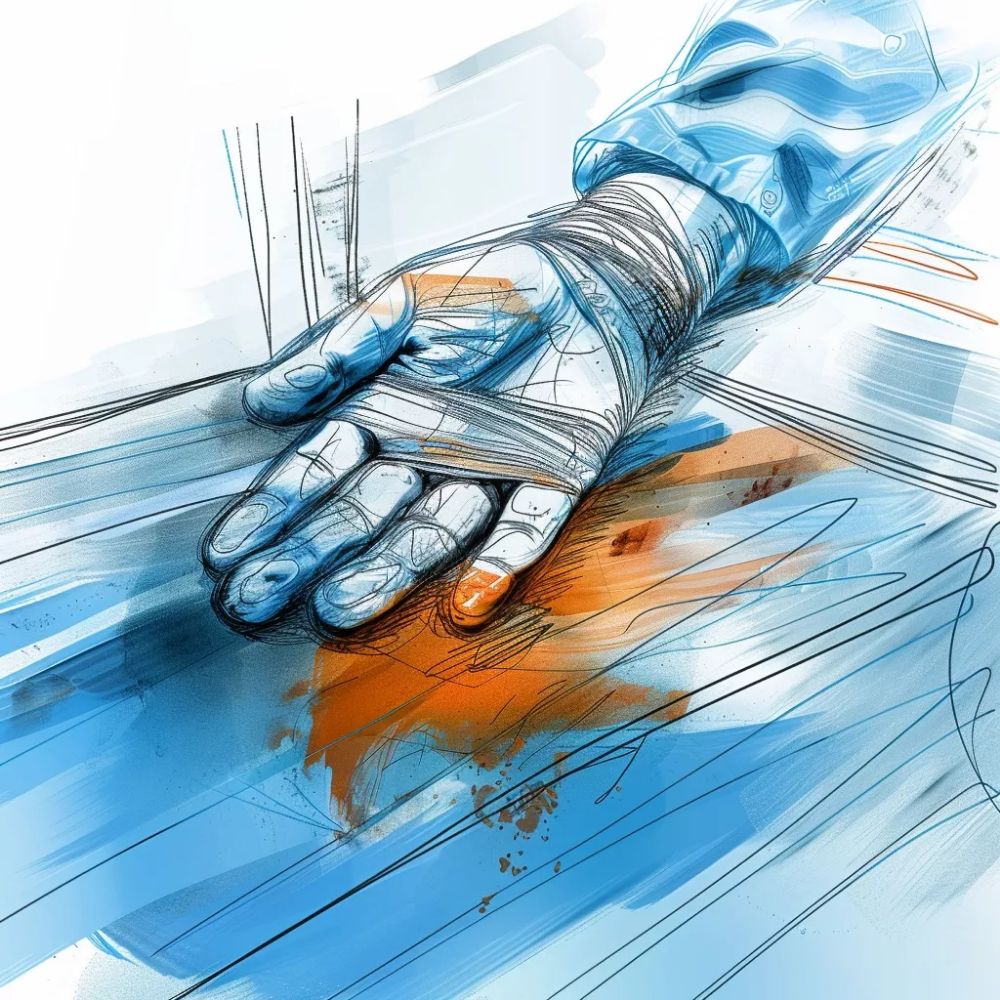
What is a hand emergency?
Within a few centimetres, the hand contains the tendons that bend and straighten the fingers, the nerves that give feeling, arteries and many joints. A cut of a few millimetres can sever a tendon or a nerve without it being visible. SOS Mains centres (emergency hand units), accredited by FESUM (the European Federation of Hand Emergency Services), are organised to treat these injuries at any time of day or night, with hand surgeons and microsurgery equipment.
Dr Cievet-Bonfils takes part in the treatment of hand emergencies at the SOS Mains unit of the Médipôle Lyon-Villeurbanne.
Which injuries need urgent medical attention?
- Wound of the hand, wrist or fingers, especially if a finger no longer bends, or if the fingertip is numb or pale
- Complete or partial amputation of a finger or part of a finger
- Crush injury (door, machine, heavy load)
- Bite (dog, cat, human), even a small one, because of the risk of infection
- High-pressure injection (paint, grease, diesel): the wound looks tiny but the internal damage is serious
- Acute infection: a red, swollen, very painful finger, fever, a red streak running up the forearm
- Fracture or dislocation with deformity, in particular an open fracture (bone visible or a wound over the fracture)
- Extensive or deep burn of the hand
What should you do straight away?
For a wound:
- rinse gently with clean water or saline solution and wash carefully with soap to clean it
- cover with a clean gauze pad and press firmly to stop the bleeding
- raise the hand above the level of the heart
- never apply a tourniquet
- remove rings, watch and bracelets before the hand swells
For an amputated finger:
- wrap the fragment in a gauze pad moistened with saline solution (damp, not soaking)
- place it in a sealed plastic bag
- put this bag in a container of water and ice: the fragment must be kept cool, never in direct contact with the ice, which damages the tissue
- do not clean the fragment with an antiseptic and do not put it directly into water
- bring the fragment with you, even if it looks damaged
In all cases:
- stay nil by mouth: do not eat, drink or smoke, because an anaesthetic is often needed
- bring your prescriptions and the list of your medications, in particular blood thinners (anticoagulants)
- check the date of your last tetanus booster
Where should you go?
In an emergency, go directly to an SOS Mains centre or call 15 (SAMU, the French emergency medical service), who will direct you. In the case of an amputation, heavy bleeding or a serious injury, call 15 rather than travelling by your own means. Going first to a general emergency department closer to home sometimes allows you to be referred to SOS Mains.
How are you treated?
On arrival, the surgeon examines the hand: movement of each finger, feeling, colour, and arranges X-rays if needed. Most hand wounds are explored in the operating theatre, because only this check makes it possible to find and repair a damaged tendon, nerve or artery.
Depending on the injuries, the operation may include:
- repair of the flexor or extensor tendons
- stitching of nerves or arteries under a microscope (microsurgery)
- fixation of a fracture
- reattachment (replantation) when the amputated finger is suitable
- washing out in the case of infection or a bite
Most of these procedures are done as a day case, under regional anaesthesia of the arm. Replantations sometimes require a hospital stay.
After treatment
- Keep the hand raised and follow the dressing instructions
- Wear the prescribed splint as instructed: a tendon repair is fragile for several weeks
- Start rehabilitation within the set time frame, with a hand therapist (physiotherapist) (directory of the GEMMSOR)
- Seek medical advice without delay in the case of fever, redness or increasing pain
Frequently asked questions
Does a small cut on the finger really need a surgeon?
Yes, if the finger no longer bends normally, if feeling is reduced or if the wound lies over a skin crease or a joint; a tendon or nerve injury that goes unnoticed is much more difficult to repair later.
How long can an amputated finger still be reattached?
The time limit is a few hours, and it gets shorter if the fragment is not cooled; that is why it must be kept cool without direct contact with the ice, and why you should seek treatment immediately.
Why do I need to stay nil by mouth?
Because an operation under anaesthesia is often carried out quickly; an empty stomach reduces the risks linked to the anaesthetic and avoids delaying the operation.
Is a cat bite an emergency?
Yes: the thin fangs inject bacteria deep into the tissue and the infection can reach a tendon sheath or a joint within a few hours; washing out and antibiotics are often needed.
Consultations in Lyon
Dr Maxime Cievet-Bonfils sees patients at:
- ICMMS – Centre Eiffel, 18-20 rue Tronchet, 69006 Lyon (3rd floor)
- Clinique de l'Infirmerie Protestante, 3 chemin du Penthod, 69300 Caluire-et-Cuire (Building D, 4th floor)
Secretary (direct line): +33 4 87 25 83 35 · Consultations in French or English.
This page provides general information. It does not replace a consultation: every situation is different.